
North Fork Payette River Watershed
Understanding Our Mountain Valley
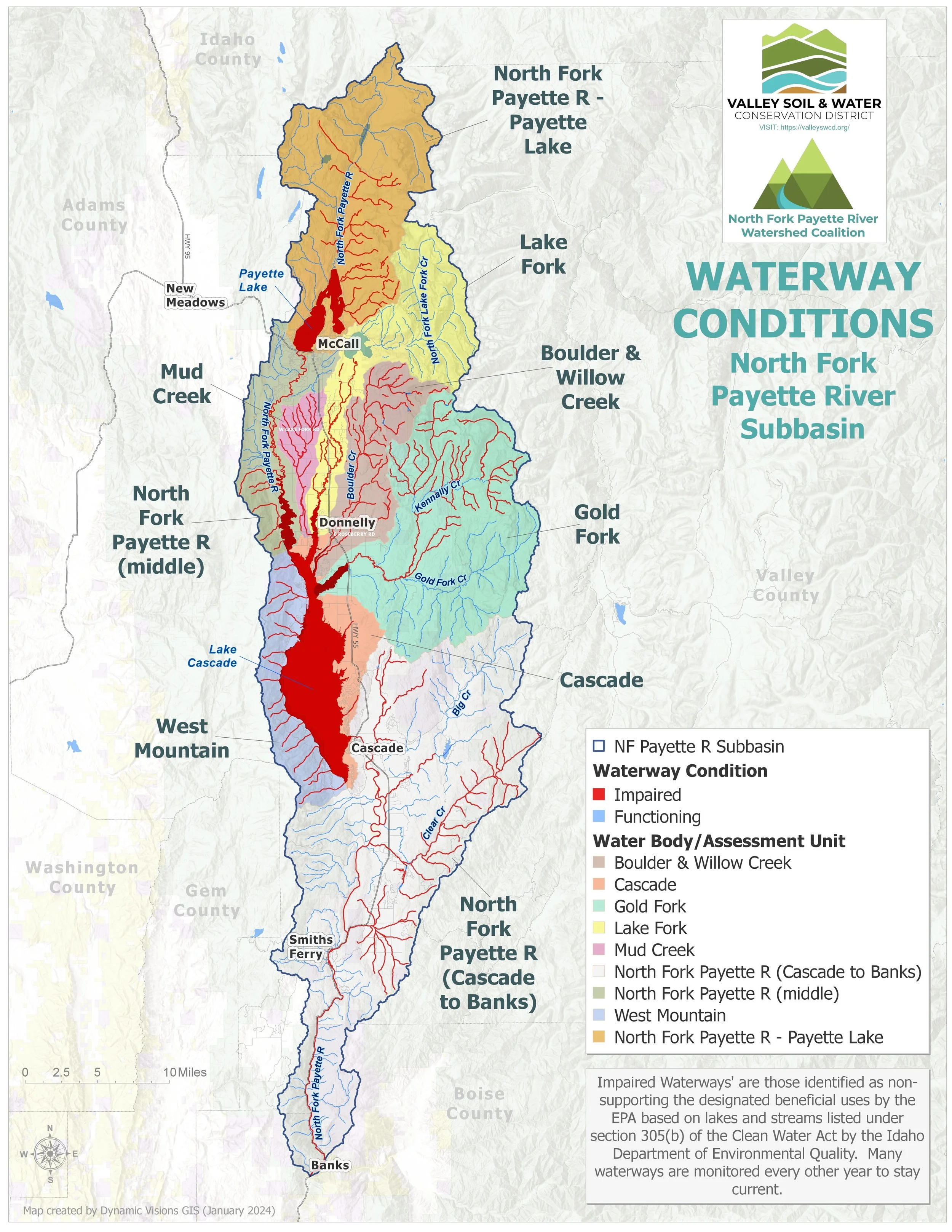
The North Fork Payette River Watershed is home to some of Idaho's most beautiful mountain landscapes. Stretching through Valley County in west-central Idaho, our watershed begins high in the mountains near McCall and flows southward, eventually joining the main Payette River. A watershed is like a giant bowl where all the rain, snow, and streams flow downhill to feed our rivers and lakes. Everything that happens on the land—from the highest mountain peaks to the valley floor—affects the water flowing through our community. Our watershed includes the North Fork Payette River, Lake Cascade, and dozens of smaller creeks and streams that feed into them.
Mountains, Forests, and Water
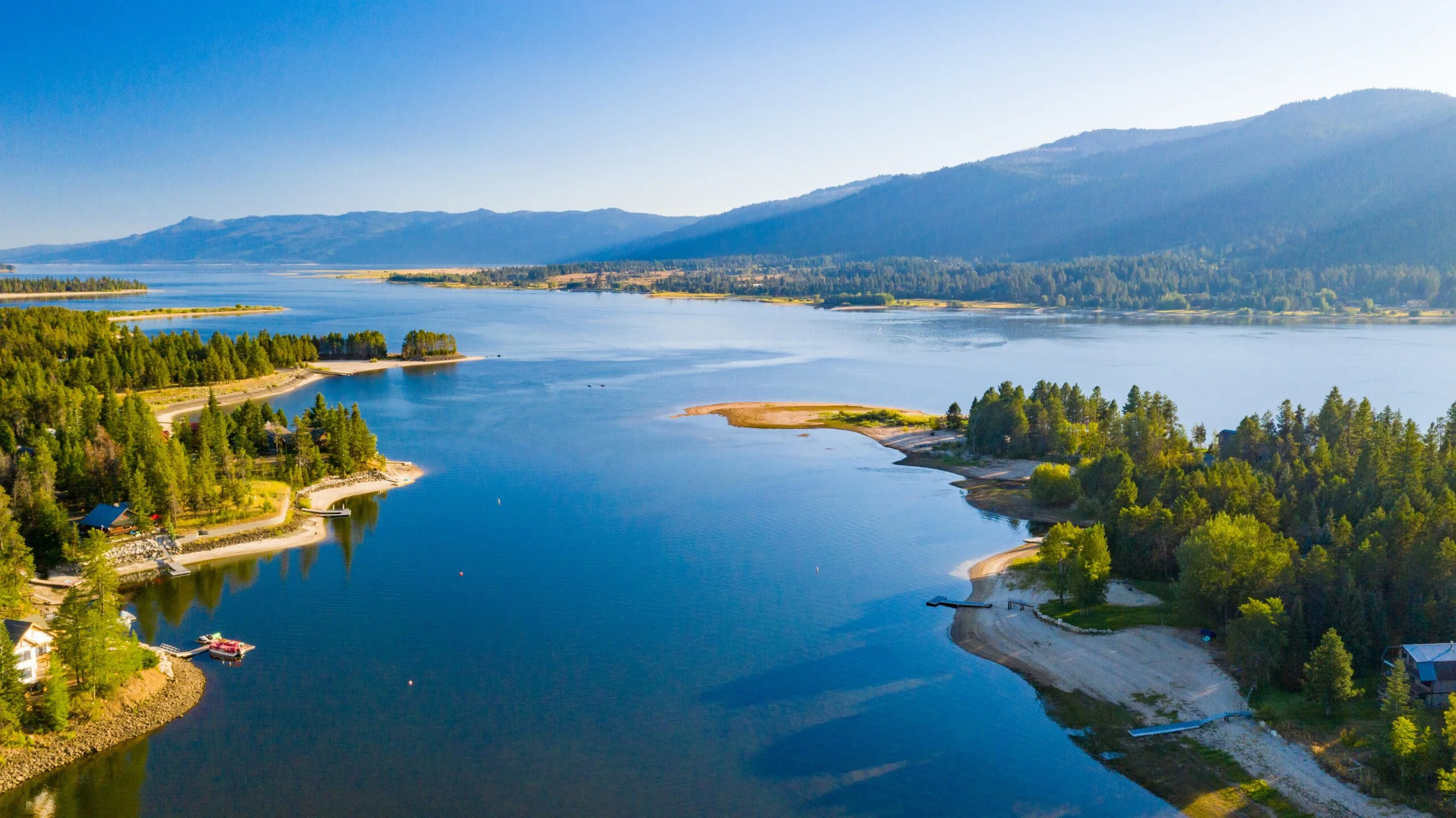
Our watershed covers a diverse landscape shaped by towering mountains, dense forests, and rushing waters. Elevations range from over 9,000 feet in the high country down to around 4,800 feet where the North Fork meets the South Fork of the Payette River to combine as the main Payette River. The mountains are covered primarily with Douglas fir, western larch, and ponderosa pine forests, while open meadows and sagebrush areas spread across the valley floors. Lake Cascade, created by Cascade Dam in 1948, is the centerpiece of our watershed, holding water for irrigation, recreation, and fish habitat. Winter brings heavy snowpack to these mountains—sometimes over 100 inches—which slowly melts each spring and summer to feed our rivers, fill the reservoir, and provide water for communities downstream.
A Working Landscape and Recreation Paradise
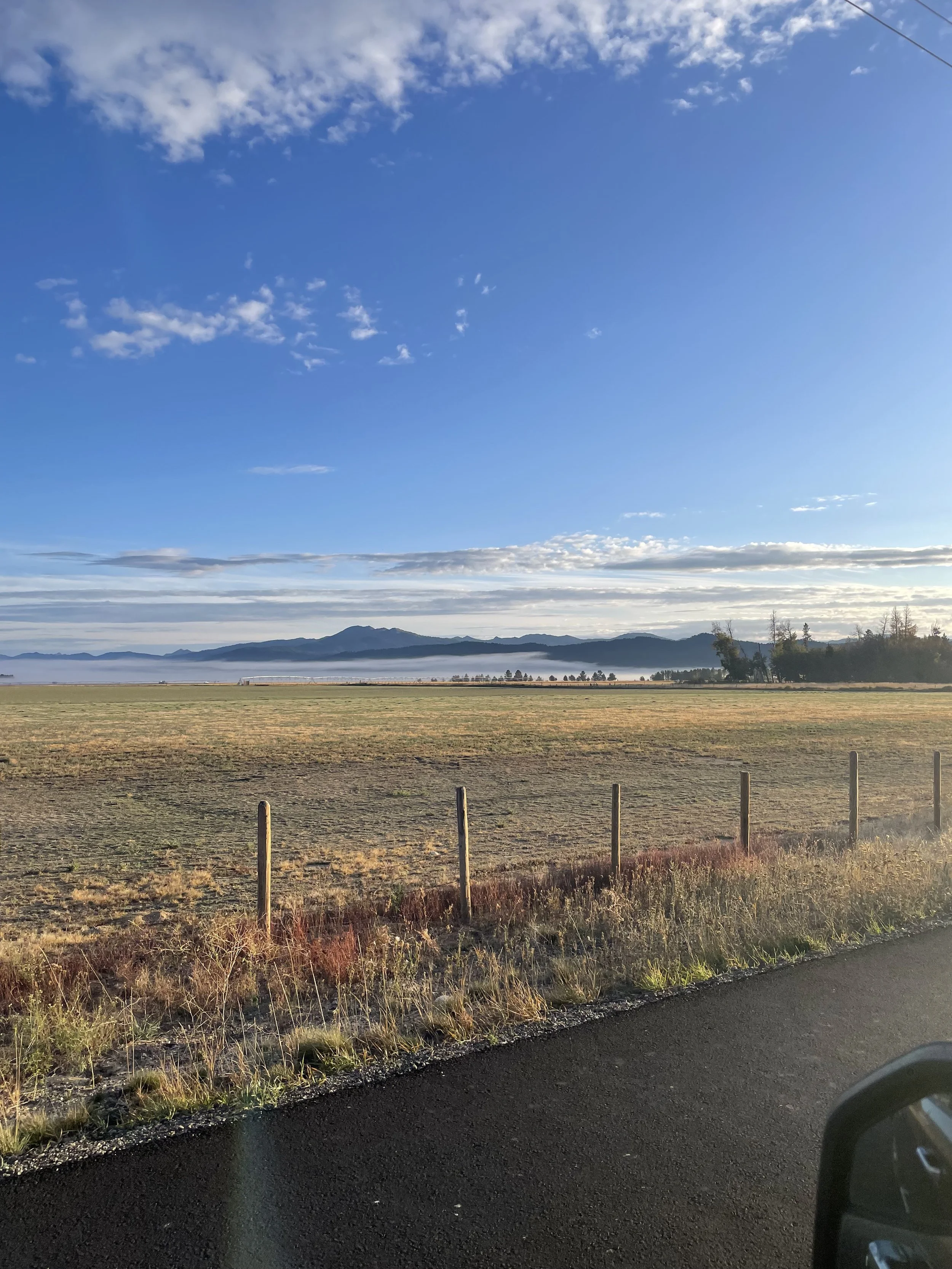
Valley County remains a working rural community where ranching and farming have been part of the landscape for over a century. Private landowners manage cattle ranches, hay fields, and timber operations that shape much of the valley floor and foothills. At the same time, our watershed has become a major recreation destination. Two ski resorts—Brundage Mountain and Tamarack Resort—bring winter visitors for skiing and snowboarding. In summer and fall, thousands of people come to camp, fish, boat on Cascade Reservoir, ride ATVs and dirt bikes, and explore hundreds of miles of trails. Snowmobilers flock to our mountains each winter to ride the backcountry. This mix of agriculture, forestry, and tourism defines who we are as a community.
Water Management and Irrigation
Water management is critical to our agricultural community, and several irrigation districts play essential roles in delivering water to farms and ranches throughout the watershed. These irrigation districts—including the Cascade Irrigation District, Round Valley Irrigation District, and others serving the North Fork valley—operate canal systems and infrastructure that date back generations. These districts manage water rights, maintain delivery systems, and work with agencies like the Bureau of Reclamation to ensure water stored in Cascade Reservoir reaches the fields that depend on it. The irrigation infrastructure connects our mountain snowpack to the hay fields and pastures that feed livestock and support our agricultural economy, making these districts vital partners in both farming operations and watershed management.

Growing Population and Changing Pressures
While Valley County still feels rural, our population is growing and changing. What was once a quiet ranching and logging community now experiences seasonal population swings as second-homeowners and tourists arrive. New housing developments are spreading across former ranch lands and forest edges. This growth brings both opportunities and challenges for our watershed. More homes mean more septic systems, more roads, more cleared land, and more demand for water. Wildfires have become more frequent and intense, affecting forest health and water quality. These changes impact everything from wildlife habitat to stream temperatures to the ability of the land to absorb and filter water naturally.
Why Watershed Health Matters
The Valley Soil and Water Conservation District works with private landowners—ranchers, farmers, forest owners, and rural residents—to protect and improve our watershed's health. Healthy watersheds provide clean drinking water, support fish and wildlife, reduce flooding and erosion, and maintain the agricultural heritage and natural beauty that define our community. When landowners use conservation practices like improved irrigation systems, stream bank restoration, forest management, and erosion control, they protect not just their own property but the entire watershed downstream. Understanding our watershed helps all of us—whether we're longtime ranchers, new residents, or weekend visitors—make better decisions about how we use and care for this remarkable landscape we all share.